Manual.ly Logo

JBL Aquaristic ProAquaTest Lab Kilavuz

0,0 · 0 Puanlar

PDF kılavuzu · 65 Sayfa

Türkçe

M: QW-35-FL
sayfa

/ 65

Loading...
20bbaef5bdec311f8d8e156c4e1fe9d6e449 page 9
16 17
deciency. Iron and some other trace elements are only sta-
ble in water for a limited time, even if they are bound to so-
called chelators, as is usual in modern fertilisers. In addition
any tap water added is usually iron-free. Therefore, the iron
content needs to be monitored regularly with this test and re-
plenished if necessary. Cncentrations as low as 0.1–0.2 mg/l
are sufcient for good plant growth. In very densely planted
aquariums, values of up to 0.6 mg/l can also be useful. In
marine water, values of up to 0.05 mg/l are recommended.
Procedure:
1. Rinse both test vials several times with the water to be
tested.
2. Use the enclosed syringe to ll each of the test vials with
5 ml of sample water.
3. Add 5 drops of Fe reagent to one of the two test vials and
mix by swirling. Allow to stand for 10 minutes until the
colour has developed completely.
4. Place both test vials in the grey comparator block: Place
the vial with added reagent at the smooth end and the
vial with untreated sample water (blank sample) at the
notched end of the comparator block.
5. Place the comparator block with the two test vials on the
colour chart in such a way that the notch points to the
values and move it on the colour chart until the colour of
the sample mixed with reagents corresponds as closely
as possible to the colour under the blank sample.
6. Read the iron content in the notch of the comparator.
Note:If you decide to use the JBL PRO AQUATEST NH
4
at
the same time, make sure you don’t mix up the measuring
vessels of either set. Traces of the JBL PRO AQUATEST
NH
4
left inside the measuring vessel may result in too high
readings in the iron test.
Correcting deviating values:
Too low: Fertilise with ferrous fertilisers from the JBL ferti-
liser range (e.g. JBL Ferropol).
Too high: Carry out the corresponding partial water change.
JBL PRO AQUATEST K
Features: JBL PRO AQUATEST K is an easy-to-use turbid-
ity test for the routine monitoring of the potassium content in
fresh and marine water.
Why test? Potassium is one of the macroelements which is
very effectively absorbed within a few hours and temporarily
stored by plants in fresh water. Growing plants require more
potassium compared to other elements. As a result, potas-
sium concentrations can drop to a minimum range, causing
plant growth to stagnate, even if the aquarium water is ferti-
lised regularly. Potassium deciency initially leads to chloro-
tic spots on the edges of the leaf, which gradually increase
and then turn into grey-brown necroses. The leaves may
crinkle or curl. In Central European tap water, potassium is
usually a decient element compared to in natural biotopes
and this especially applies to calcium and magnesium con-
centrations. For good plant growth, the potassium content
needs to be at around 10 mg/l, in aquariums with high il-
lumination (e.g. in so-called scapes) up to 30 mg/l can be
useful. Higher potassium values in aquarium water encour-
age the growth of green thread algae. Potassium is present
in seawater in concentrations of about 380–400 mg/l, but is
only consumed in small quantities. Excessively high potas-
sium contents can be dangerous for sensitive animals such
as shrimps. The potassium content of the aquarium water
needs to be measured on a daily basis initially. This enables
the needs of the plants to be determined and the dosage of
the fertiliser can be carried out accordingly. Afterwards, rou-
tine measurements can be carried out after longer intervals.
Procedure:
Freshwater:
1. Rinse the measuring tube (plastic) and the tube (glass)
for the potassium content reading several times with the
water to be tested.
2. Using the syringe supplied, ll 15 ml of sample water into
the measuring tube.
3. Add 10 drops of reagent 1 and mix by swirling.
4. Add 1 large level measuring spoon (broad end of the
enclosed double-ended spoon) of reagent 2 and swivel
slightly for about 30 seconds until the powder has dis-
solved. The water becomes whitish and cloudy. Leave to
stand for 1 minute and then swirl slightly again.
5. Place the glass tube for reading the potassium content
reading on the cross of the colour card.
6. The following procedure should be carried out in bright,
diffuse light. Pour the´ turbid water from the measuring
tube into the reading tube until the turbidity means the
cross on the colour card is no longer visible from above.
7. The potassium content can now be read on the scale of
the tube (bottom of the meniscus).
Marine water:
1. Fill 10 ml sample water with distilled water to 300 ml.
2. Follow the same steps as for fresh water.
3. Multiply the test result by a factor of 30.
Correcting deviating values:
Too low: In freshwater aquariums fertilise with potassium-
containing fertilisers from the JBL ProScape range. We do
not recommend an additional dosage in marine water be-
cause potassium is toxic for various organisms.
Too high: Repeat the measurement after 24 hours. If the
value is still too high, carry out the corresponding partial
water change.
JBL PRO AQUATEST Cu
Features: JBL PRO AQUATEST Cu is an easy-to-use color-
imetric test to routinely determine the copper content in fresh
and marine water aquariums, and in garden ponds. A com-
pensation method developed by JBL allows reliable results
to be obtained even in slightly discoloured water (caused by
peat ltering or disease treatment etc.).
Why test? Copper is a heavy metal which is on the one
hand indispensable as a trace element for plant and animal
organisms. On the other hand it has a devastating effect
as a cell poison (cytotoxin) above a certain concentration.
Copper mainly reaches the aquarium in tap water, as cop-
per pipes were often used for water installation. If the water
remains in such pipes for a longer period of time, consid-
erable amounts of copper can dissolve. The water in the
pipe should therefore be drained before use. For the same
reason, do not use rainwater that has owed over copper
gutters. And make sure the tools you use when setting up
your aquarium or pond are copper-free. A controlled entry
of copper takes place through the application of medications
against parasitic sh diseases, as well as with some algae-
killing agents. The copper concentrations prescribed for this
can be tolerated by sh for a certain time while parasites,
etc., start dying off immediately.
Please note: Copper quickly forms water-insoluble com-
pounds which form deposits on the ground. The JBL PRO
AQUATEST Cu only detects copper dissolved in water.
Procedure:
1. Rinse both test vials several times with the water to be
tested.
2. Use the enclosed syringe to ll each of the test vials with
5 ml of sample water.
3. Add 5 drops of reagent 1 to one of the two test vials and
mix by swirling. Then add 5 drops of reagent 2 and mix
again. Allow to stand for 15 minutes until the full colouring
develops.
4. Place both test vials in the grey comparator block: Place
the vial with added reagent at the smooth end and the
vial with untreated sample water (blank sample) at the
notched end of the comparator block.
5. Place the comparator block with the two test vials on the
colour chart in such a way that the notch points to the
values and move it on the colour chart until the colour of
the sample mixed with reagents corresponds as closely
as possible to the colour under the blank sample.
6. Read the copper content in the notch of the comparator.
Correcting deviating values:
Too low: The value should always remain below the detec-
tion limit (except for some special treatments).
Too high: Regular use of JBL water conditioners, such as
JBL Biotopol or ltering with JBL’s high performance acti-
vated carbon. Water-insoluble copper compounds can only
be eliminated by removing the complete substrate.
JBL PRO AQUATEST O
2
Features: JBL PRO AQUATEST O
2
is an easy-to-use colori-
metric test for the routine monitoring of the oxygen content
in fresh and marine water aquariums, and in tap and garden
pond water, within a range of 1–10 mg/l (ppm).
Why test? All animals living in water need oxygen to
breathe. Even the „invisible helpers“ in aquariums and
ponds, the cleansing bacteria, are dependent on a suf-
cient oxygen content for the conversion of ammonium to
nitrate. The oxygen supply they need can be safeguarded
by adequate planting. In aquariums and ponds with little or
no planting and in marine aquariums, the oxygen content
always needs to be kept at the appropriate saturation value
with the help of technical equipment. The saturation value
depends on the water temperature (see table on last page).
Plants are able to exceed this saturation value through their
assimilation activity. In well planted aquariums and ponds,
for example, values can be found towards the end of the
lighting period, which are 1 to 2 mg/l higher than the satura-
tion value.
Procedure:
1. Rinse the measuring vessel several times with the water
to be tested.
2. Fill the measuring vessel to the brim with the water to be
tested by immersing it in water and place it on a water-
proof surface.
3. Add 6 drops of O
2
reagent 1 and 6 drops of O
2
reagent
2 slowly one after the other, until the measuring vessel
overows.
4. Avoiding bubble formation, close the measuring vessel
bubble-free with the enclosed cap and shake vigorously
for approx. 30 seconds.
5. Remove the cap from the measuring vessel and add 6
drops of O
2
Reagent 3.
6. Close the measuring vessel again (bubbles no longer
matter) and shake vigorously for approx. 30 seconds. Al-
low to stand for 10 minutes until the full colouring devel-
ops.
7. Move the measuring vessel back and forth approx. 3–5
cm above the white part of the colour chart and select the
colour with the best possible match.
8. Read the oxygen content off the relevant colour eld.
Correcting deviating values:
Too low: Put in more plants and/or improve care of exist-
ing plants, e.g. by installing a CO
2
supply unit (JBL ProFlora
CO
2
kit). Improve ventilation, e.g. with a JBL ProSilent air
pump and/or improve water movement on the surface with
ow pumps, protein skimmers (marine water) or in garden
ponds with stronger pumps (pond lters) in conjunction with
a waterfall or watercourse.
Too high: Not applicable.
JBL PRO AQUATEST CO
2
Direct
Features: JBL PRO AQUATEST Ca is an easy-to-use titra-
tion test to determine the carbon dioxide content of fresh-
water.
Why test? Carbon dioxide (CO
2
) is the most important plant
nutrient. The consumption of CO
2
differs from aquarium to
aquarium and depends, amongst other things, on the fol-
lowing factors: number and demands of plants, carbonate
hardness, water movement and light. Fertilisation with CO
2
is usually done with a CO
2
fertiliser system. In the aquarium
water, a CO
2
content between 15 and 30 mg / l is recom-
mended. This range is safe for sh and at the same time en-
sures luxuriant plant growth. 20–25 mg/l CO
2
has proven to
be ideal. In special aquariums with a large number of plants,
so-called scapes, higher values of up to 35 mg/l may be re-
quired. With this test you can determine the CO
2
content of
your aquarium water in mg/l and thus monitor the setting of
your CO
2
fertiliser system.
Please note: When fertilising with so-called liquid carbon,
fertiliser monitoring with JBL PRO AQUATEST CO
2
Direct is
not possible because these fertilisers do not contain CO
2
but
other carbon compounds.
Procedure:
1. Rinse the measuring vessel and syringe several times
with the water to be tested.
2. Using the syringe, insert 20 ml of bubble-free sample
water into the measuring tubes.
3. Place the measuring tube on both elds of the enclosed
colour chart.
4. Pour 5 drops of reagent 1 into the measuring tube on the
white eld and swirl it until it is mixed.
5. Add reagent 2 drop by drop. After each drop, swirl and
count the drops until a pink colour is obtained which re-
mains stable for 60 seconds and corresponds to the col-
our in the second measuring tube on the pink colour eld.
To compare the colours, look into the tubes from above.
6. The number of drops multiplied by 2 gives the carbon di-
oxide content in mg/l. Example: 10 drops of reagent 2 =
20 mg/l CO
2
.
Since other acids in the water impair the measurement, a
blank value must also be determined. To do this, take a wa-
ter sample of 100 ml and aerate it for 15 min using a JBL
ProSilent air pump with an air stone. Then determine the
blank value according to the instructions given above.
Result–blank value = actual carbon dioxide concentration
in mg/l.
Correcting deviating CO
2
values:
Too low: Add carbon dioxide to the aquarium using a JBL
ProFlora CO
2
fertiliser system.
Too high: Aerate the aquarium using a JBL ProSilent air
pump.
CO
2
table
Special feature: The CO
2
table enables you to determine
the carbon dioxide content through the carbonate hardness
(KH) and the pH value of the water. This method should only
be used if no pH-lowering substances, such as nitrate or
peat, are in the water.
Why test?
Carbon dioxide (CO
2
) is the most important plant nutrient.
The consumption of CO
2
differs from aquarium to aquarium
and depends, amongst other things, on the following factors:
number and demands of plants, carbonate hardness, water
movement and light. Fertilisation with CO
2
is usually done
en
en
en
en
en

Yapay zeka ile JBL Aquaristic ProAquaTest Lab kılavuzunuzla sohbet edin

JBL Aquaristic ProAquaTest Lab kılavuzunuzdan yapay zeka ile anında yanıt alın

JBL Aquaristic ProAquaTest Lab hakkında istediğinizi sorun. Yanıtlar bu kılavuzdan gelir ve dayandığı sayfalar belirtilir.

ProAquaTest Lab Bakim Takvimi

Günlük
Tatlı su akvaryumunda magnezyum içeriğini ölçün

Bitki ihtiyaçlarını ve gübre dozajını belirlemek için başlangıçta günlük olarak ölçüm yapın. Daha sonra daha uzun aralıklara geçin.

Kilavuzda goster (3. sayfa)
Günlük
Tatlı su akvaryumunda potasyum içeriğini ölçün

Bitki ihtiyaçlarını ve gübre dozajını belirlemek için başlangıçta günlük olarak ölçüm yapın. Daha sonra daha uzun aralıklara geçin.

Kilavuzda goster (9. sayfa)
M: qwen/qwen3.8-flash

Soru Sor Soru

0/1000

ProAquaTest Lab'i önerir misiniz?

Evet Hayır

Sıkça Sorulan Sorular

A

Testten önce tüm kapları numune suyu ile birden fazla kez durulayarak doğru sonuçlar elde edin. Hava kabarcıklarını önlemek için damlayıcıları dikey tutun. Renk gelişimi için belirli bekletme sürelerini izleyin. Renkleri beyaz bir arka plan üzerindeki kart ile karşılaştırın. Tutarlı hacimler için sağlanan şırıngaları ve komparator bloklarını kullanın.

Bu yanıt yardımcı oldu mu?

A

pH dalgalanmaları sucul organizmalara zarar verebilir. Anlık değişiklikler özellikle streslidir. Renkli su okumalarıyla müdahale edebilir ancak telafi yöntemleri yardımcı olur. Her zaman aynı gün içinde ölçün, çünkü ışık CO2 seviyelerini ve pH etkiler. Kimyasal veya yem ekledikten hemen sonra test yapmayın.

Bu yanıt yardımcı oldu mu?

A

Yeni düzenlerde özerk ve amonyakla birlikte pH gibi kritik parametreleri düzenli olarak kontrol edin. Sistem kararlı hale geldiğinde besinleri aylık olarak nitratt ve fosfatı ayda bir test edin. Sertlik trendlerini izlemek için GH ve KH'ı haftada bir kontrol edin. Balıklar sıkıntı belirtileri gösterdiğinde veya yoğunca yerleştirilmiş tanklarda oksijen seviyelerini test edin. Sıklık, yerleşim yoğunluğuna ve tank boyutuna bağlıdır.

Bu yanıt yardımcı oldu mu?

A

Evet kılavuz tatlı su akvaryumlarını, deniz akvaryumlarını ve bahçe göletlerini kapsar. Yüksek yerleşim yoğunluğu olan Koi göletleri için özel testler vardır. Sertlik ve pH testleri en taze su ortamları için geçerlidir. Aktif bitki büyüme döngülerine sahip dikey akvaryumlar için CO2 testleri özeldir.

Bu yanıt yardımcı oldu mu?

A

Yüksek amonyak biyolojik filtre problemi olduğunu gösterir. Acil olarak büyük hacimli su değişimi yapın. Nitrojen döngüsünü yeniden sağlamak için faydalı bakteriler ekleyin. Son kullanılan ilaçların faydalı bakterilere zarar verip vermediğini kontrol edin. Seviyeler güvenli sınırlara döndükçe yemlenmeyi azaltın. pH'yi amnyak toksisitesi seviyelerini etkilediği için izleyin.

Bu yanıt yardımcı oldu mu?

A

Sodyum karbonatlar içeren JBL su koşullandırıcıları ekleyerek düşük karbonat sertliğini düzeltin. Akvaryumlar için tasarlanmış mineral tuz karışımlarını da kullanabilirsiniz. Eğer zaten çok düşükse suyu yumuşatmadan. pH salınımlarından kaçınmak için ayarlamadan sonra yakından izleyin. Kararlılığı onaylamak için 24 saat sonra tekrar test edin.

Bu yanıt yardımcı oldu mu?

A

Reaktifleri orijinal ambalajlarında oda sıcaklığında kuru yerde saklayın. Doğrudan güneş ışığı ve ısı kaynaklarından uzak tutun. Şişelere geri dönmeden önce damlayıcıların dış yüzeyinin kuru olduğundan emin olun. Farklı test kitleri arasında kapları karıştırmayın. Eski reaktiflerin yanlış sonuçlar verebileceğini unutmayarak son kullanma tarihlerini düzenli olarak kontrol edin.

Bu yanıt yardımcı oldu mu?

M: QW-35-FL

Avantajlar ve Dezavantajlar

Avantajlar

  • Tatlı su, deniz ve bahçe göletleri dahil çok çeşitli sucul ortamlar için tüm ana parametreleri kapsayan kapsamlı test aralığı
  • Turba filtresi veya tedavilerden kaynaklanan renk değişen sularda bile güvenilir sonuçlar sağlayan gelişmiş telafi teknolojisi
  • Kullanıcı hatalarını en aza indiren detaylı prosedürler ve ölçümlerin kolay yorumlanması için renk kartları gibi görsel araçlar içerir
  • Doğru şekilde saklandığında reaktifler stabil ve etkilidir, su kimyasının uzun vadeli tutarlı izlenmesine olanak tanır
  • Sağlanan özel araçlar test sürecini basitleştirir, acemi için erişilebilir olmasını sağlarken uzmanlar için de doğru kalır
VS

Dezavantajlar

  • Çözüm rengi değişmeden doğruluğu sağlamak için bazı testlerin rengi 15 dakika içinde okunması gerekir
  • Kullanıcılar test kaplarının farklı test kitleri arasında karıştırılmamasını sağlamalıdır çünkü örneğin kirliliği önlemek için gerekli
  • Doğruluk dikkatli damla sayımına ve damlayıcıların dikey tutulmasına bağlıdır, bu da detaylara dikkat gerektirir
  • Yüksek toksin seviyelerinin düzeltilmesi genellikle anında büyük hacimli su değişiklikleri gerektirir bu da rahatsız edici olabilir
  • Reaktifler zamanla degradasyona uğrayabilir, eğer orijinal ambalajlarda ve ısı ile nem kaynaklarından uzakta saklanmazlarsa
M: QW-35-FL

Ürün Özellikler

Kapsam

Su Değerleri

Tür

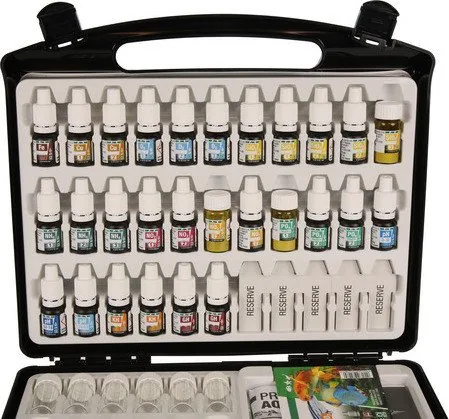
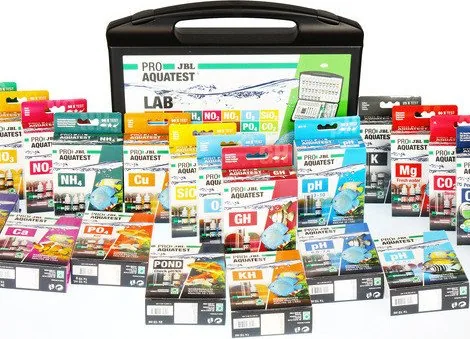
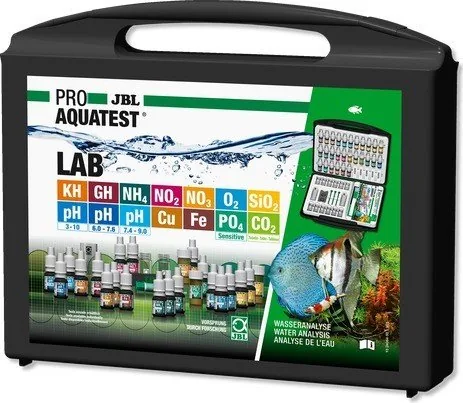
Su Testi (pH (3 Aralık), Karbonat Sertliği, Toplam Sertlik, Fosfat, Nitrit, Nitrat, Demir, Bakır, Silikat, Oksijen, Amonyum, Amonyak, CO2 Dolaylı), Test Kiti

Boyutlar

38,20x8,51x31,80cm (En x Boy x Derinlik)

Ağırlık

1,27 kg

M: QW-35-FL

Ürün Açıklama

Akvaryum Su Kimyasında Ustalaşma

Sağlıklı bir sucul çevre sürdürmek, yaşam içindeki tüm organizmaların refahını sağlamak için su kimyasının hassas bir şekilde izlenmesini gerektirir. JBL Pro AquaTest Lab Test Vaka Kılavuzu, üst düzey koşullarda tutmaya talep duyan hobiciler için temel rehberlik sağlar. Bu kapsamlı koleksiyon, mevcut analiz yöntemleri için detaylı talimatlar sağlayarak balıklarınızın ve bitkilerinizin optimum koşullarda gelişmesini sağlar.

Netlik İçin Temel Test Yöntemleri

Su kalitesi, türden bağımsız olarak herhangi bir akvaryum düzeninin başarısını belirler. Türlü türden tatlı su deniz canlıları veya bahçe göleti Koi'leri tutun, kararlılık için farklı parametrelerin özel dikkat gerektirdiği. Kılavuz, herkes için doğruluk ve kullanım kolaylığı için tasarlanmış gelişmiş titrasyon ve kolorimetrik yöntemleri detaylandırır. KH ve GH gibi titrasyon testleri, sertlik seviyelerini zaman içinde etkili bir şekilde belirlemek için hassas damla sayıları kullanır. pH ve temel besinler gibi kolorimetrik testler, hızlı kontroller için net ve okunabilir sonuçlar sağlamak için renk kartlarına dayanır. Her test, su numunelerinin test süreci sırasında kullanıcı hatasını en aza indirmek için adım adım prosedürleri içerir. Sistem, turba filtresi veya tedaviden kaynaklanan su renk değişimlerini etkili şekilde telafi ederek zorlu koşullarda bile güvenilirliği sağlar.

Sağlık İçin Kapsanan Kritik Parametreler

Su profilinizi anlaymak, hassas canlılara zarar veren tehlikeli dalgalanmaları önlemek için önemlidir. Pro AQUATEST GH ve KH gibi sertlik testleri, hassas canlıları önemli ölçüde zarara uğratan tehlikeli pH salınımlarını önler. Belirli aralıklardaki pH seviyeleri, asidik tatlı sudan alkalin deniz tanklarına kadar farklı türlere mükemmel şekilde uyar. Besin testi, sistemin işlevini doğrudan izlemek için Amonyum, Nitrit ve Nitrat gibi karmaşık nitrojen döngülerini izler. Fosfat ve Silikat seviyeleri, tankınızı boğabilen ve balıkları öldürebilen inatçı yosun patlamalarını önlemeye yardımcı olur. Büyüme için hayati önem taşıyan Demir ve Bakır gibi iz elementler, toksisite risklerinden kaçınmak için sıkı kontrol altında tutulmalıdır. Oksijen seviyeleri balıklar ve bakteriler için yaşam desteği sağlarken CO2 gübrelemesi dikey tanklarda gelişen bitki büyümesine yardımcı olur.

Kararlılık İçin Bakım ve Düzeltmeler

Parametreleri sabit tutmak, ekosistemdeki uzun vadeli strese ve hastalık patlamalarına neden olur. Değerler önerilen aralıklardan saparsa, düzeltme adımları düzenlenmek için rehberlik eder. Çok düşük sertlik mineral tuzları eklemeyi gerektirirken aşırı ters ozmoz filtresini azaltmak için önerir. Besin eksiklikleri, online olarak kolayca satın alınabilen ProScape serisinden özel gübreler gerektirir. Yüksek toksin seviyeleri, sistemi hızlıca dengelemek için acil su değişiklikleri veya biyolojik filtrelerin tanıtılmasını gerektirir. Depolama talimatları, süresiz önce reaktiflerin bir sonraki test dönemleri için etkili kalmasını sağlar. Reaktiflerin dağıtımı sırasında hava kabarcıklarını önlemek için damlayıcılar dikey tutulmalıdır. Düzenli izleme, tanklarınızın bakım rutininizde beklenmedik sürprizleri önler. JBL Pro AquaTest Lab Test Kiti Kılavuzu talimatlarını takip ederek akvaryum sahipleri evcil hayvanları için su berraklığı ve kararlılığı elde edebilir.

M: QW-35-FL

© Copyright 2026 Manual.ly